Strengthening a family bond with Ireland

October 4, 2024

Paul Kelly’s family links to Ireland, which began over a century ago, have taken on a modern twist through his sons.

Paul’s grandfather John William Kelly arrived in New Zealand in 1911. Within a few years all his siblings, four lads and their sister, had followed him. As Paul wrote in The Kelly Clan from Boyle in Roscommon, their Kiwi descendants now number in their hundreds.

A century after that first Kelly emigration, Paul was in a group of elderly O’Kiwi rugby fans including Martin Maguire, Pat Martin and the late Jack Doherty who, in a nod to their shared heritage, followed the Irish team during the 2011 Rugby World Cup in New Zealand. Jack christened the group ‘The Bench’, given their readiness to step in to any Irish or All Black team should they get the coach’s call. On part of that trip they were joined by Paul’s sons, Hayden and Sam.

Sam from Tawa and Jen from Cork.

Four years later, just before the 2015 Rugby World Cup, Sam invited his father to join him for the leg of a European trip that took in England and Wales where the World Cup was being held. Paul jumped at the chance.

They travelled through England, Scotland, Wales and Ireland, where they visited the ancestral homeland in Boyle. There, the current owners of the Kelly home in Green Street in Boyle warmly invited them inside to see where their forebears once lived. 

Wonderfully fine weather accompanied the pair as they drove around Ireland, from Dublin to Belfast, Leitrim, Donegal, Limerick, Galway, the Ring of Kerry, Killarney, Cork and back to Dublin. Night stopovers were often in or near an Irish pub, frequently in locations that had links to friends and family back home.

It was essential that any pub had TV coverage of the World Cup. At the Muskerry Arms Hotel in Blarney, Paul and Sam settled in for the afternoon to view an evening game. As the crowd of rugby supporters swelled they joined a group of All Black fans. It was great to know they had a room booked upstairs avoiding any further travel that day, especially as a band started up once the games were over.
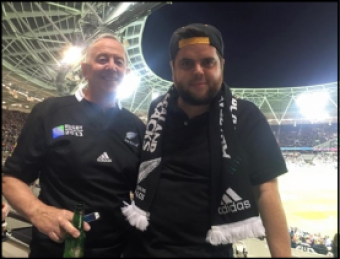
Paul and Sam on the All Blacks’ trail in the UK.

During the evening, however, Sam had more than just rugby on his mind. Earlier he had informed his father that he had been in contact with a young Irish woman from Cork who would be joining him. On arrival, the couple found a table towards the back of the hotel. This was Sam’s first face-to-face meeting with Jennifer Ní Éafaigh, Jen Heaphy.

Sam and Jen had a great time at the Muskerry Arms that evening. A challenge that featured a haka by Sam and Irish dancing by Jen even drew some attention away from the rugby.

The following day Paul and Sam returned to Dublin and squeezed in a visit to Temple Bar before the long journey home—Sam to Brisbane and Paul to Tauranga, where he had retired.

Sam kept in contact with Jen and, five months after their first meeting in Blarney, Jen visited him on holiday. Sam showed her around Brisbane and the Whitsundays. On returning to Cork, Jen applied for a visa to move to Australia.

In June 2016 Sam visited Cork to meet her parents, Caroline and Ron. A few months later, Jen joined Sam in Brisbane and found a job. By this time, the pair estimate they had sent 70,000 messages including long phone calls.

With Jen missing her family, she and Sam spent Christmas in Ireland in December 2018. On returning to Australia, they became engaged in October 2021.

In March 2024 Jen and Sam married in Tauranga, where his parents live and where friends from Wellington and Australia could easily visit. Jen’s parents and family from Ireland and the USA were also at the wedding, held at the Old Forest School near Te Puke. It was a memorable occasion in a perfect setting as Jen and Sam exchanged their wedding vows. 

On returning to Australia, Sam and Jen decided to move down to Geelong, just south of Melbourne. On frequent visits to their home, Paul can’t help but think about the story of how the couple met at the Muskerry Arms, the dedicated journey Jen has made to bring a little bit of Ireland closer to the Kelly gang, and how cultural connections can be rekindled over a century after his own family left Ireland.


Shane MacGowan and a Martin headstone

November 21, 2021

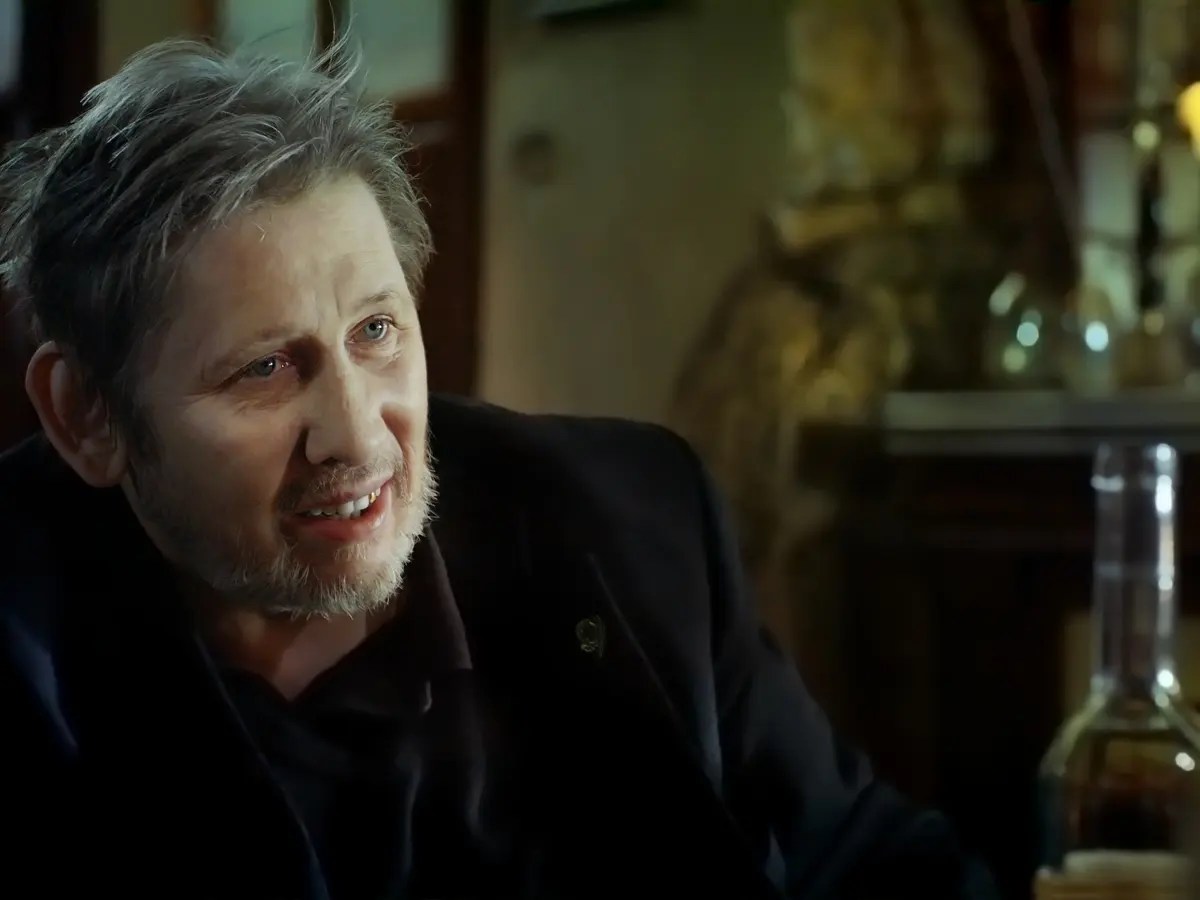
It’s over eight years since I’ve posted anything on this site and it took Shane MacGowan to get the words flowing. I’ve just watched a brilliant film festival documentary, ‘Crock of Gold: A Few Rounds with Shane MacGowan 2020’, in which the former Pogues frontman and songwriter opens up about his life and Ireland’s tumultuous history.

Shane MacGowan was born on Christmas Day, 1957.

‘Opens up’ probably overstates it because after a lifetime thrashing himself with drugs and alcohol, MacGowan is bloated and barely audible. His words are sub-titled. But the spark still glows inside the man Clash leader Joe Strummer described as ‘Ireland’s greatest songwriter of the 20th century’.

Under the influence of punk, MacGowan sought to ‘kick Irish music up the arse’, as he put it, and drag it into the twentieth century. But Crock of Gold’s most striking section is MacGowan talking about childhood holidays running wild at his extended family’s Tipperary farm, not far from where my Martin forebears come from. Read more


The darkness of an Irish morning

March 17, 2013

John Patrick Shanley’s superb column in the New York Times about meeting his Irish relations (see below) reminded me of my grandfather, Bill Martin. A tradesman painter at Moera’s railway workshops, Bill was the son of a piano-playing Irishman from Co Tipperary, and an Irishwoman from Co Armagh.

He practised his storytelling skills in Lower Hutt’s Bellevue Hotel, a handy bike ride from the workshops. Today the pub is a smart establishment but back in the 1930s and 40s, its public bar had a sawdust floor and Bill would spin his yarns to the men standing about with their beer perched on wooden barrels.

Today is March 17 and people of Irish descent all over the world are celebrating their heritage. Shanley brilliantly captures a sense of that heritage and why we remember stories about our grandparents.

The Darkness of an Irish Morning

By JOHN PATRICK SHANLEY

MY father came from Ireland and he had the gift of the gab. Part of the reason the Irish developed the gift of the gab was simple. They lived on an island. They had to get along. Not that they did get along. But they had to try. So a style of speaking developed that allowed them to say awful things. With charm. Read more >


Dave Gallaher: an outstanding Irishman and a great Kiwi

January 24, 2013

Dave Gallaher the-original-all-blacks-captainBook Review

by Emmett Devlin 

Dave Gallaher: The Original All Black Captain. Matt Elliott. HarperCollins 2012. 259pp.

Any Kiwi with an interest in rugby and connections with Ireland will enjoy this biography of one of New Zealand’s most famous sportsmen and one of the great – if not the all-time greatest – All Blacks.

The book begins with Gallaher’s birth in 1873 into a shop-owning middle class family in a tiny seaside village in Donegal called Ramelton. His father James was 62 and his mother Anna Maria Hardy McCloskie, James’ second wife, was just 29. Dave was James and Anna Maria’s seventh child, born seven years after they married. Three of their children had died in infancy. Three more were born in Ramelton after Dave. Read the rest of this entry »


Gathering of the clans

November 21, 2012

Throughout 2013, Ireland will call home hundreds of thousands of friends and family from all over the world to gatherings in villages, towns and cities.

Anyone with an Irish connection is being urged to visit and rediscover their history. ‘There will be clan gatherings, festivals, special sporting events, music and concerts taking place all across the country, all year long,’ says the official Gathering Ireland website.

Over 70 million people worldwide claim Irish ancestry and, for anyone who went to a Catholic school in New Zealand, reading through the list of Irish clans who are planning reunions (below) is like looking through the names on old school photos. Read the rest of this entry »


In search of a living wage

September 24, 2012

Record levels of inequality in New Zealand would shock Irish immigrants who came to this country to make a better life.

‘This is a good country for working men as some men have from ten to twelve shillings per day,’ wrote Manawatu farmer’s wife Catherine Sullivan in 1905. ‘It is not like home. The worst men here won’t come to work for less than 7/- per day, and only work from 8 to 5pm.’

Catherine, an Irish immigrant, was writing to her brother-in-law in Ballingarry, Co Limerick, describing what he might find should he decide to follow her(1).

Many Irish, Scots and English came here to create a better life and to escape the poverty of their homelands. In recent decades, Pacific migrants have been doing the same. Read the rest of this entry »


On the Martin trail

February 15, 2012

Six generations of Martins had worked in his Galway pub, he said, adding that his grandfather’s name was John, his father was Billy, and he had a son named Liam. ‘Well, Billy,’ I replied, ‘I don’t know if we’re related, but my grandfather was Billy, my father’s name was John, and I too have a son named Liam.’

‘Be prepared for setbacks’ is one of the first pieces of advice you’ll get from experienced family researchers. How true, I discovered, as I started to delve into my Martin family history.

In 2004, I went to Christchurch’s Linwood Cemetery where my Irish great-great-grandparents, Michael and Mary Martin (nee Boland), are buried. Thanks to the council’s excellent records, the plot was easy to find in the Catholic section where Michael had been buried in 1895 and Mary five years earlier.

A welcoming sign, but I was looking in the wrong place

I approached the grave site expecting at least a national monument in honour of my forebears. Instead, all I found was an unmarked patch of dry grass and weeds. It seems that on the voyage to New Zealand in 1864, Michael had carved himself a big wooden Celtic cross. His pride and joy had been placed as his headstone. The weather, or vandals, had long since destroyed it. [Happy to say that on a return visit in 2021, I discovered someone has placed a new headstone]. Read the rest of this entry »


Irish fighting for New Zealand

November 10, 2011

Paul Kelly writes about his Irish great uncle, Robert Edward Kelly, an Irish immigrant who fought in World War 1. Family members back in Ireland couldn’t understand why their New Zealand kin were so keen to fight for the British in the Great War.

A recent O’Kiwi blog had some notes about my Kelly family from Boyle in Co. Roscommon. The story of my great-uncle, Robert Edward Kelly, provides some more insights into the fortunes of New Zealand’s Irish migrants.

Robert Edward Kelly

Robert Edward Kelly fought at Gallipoli

Robert was the third son of my great-grandparents, John Kelly and Elizabeth Catherine Kelly (nee McCann) from Boyle. They had their children in quick succession – my grandfather John William Kelly was born in January 1886 and Robert was born in December the same year.

Read the rest of this entry »


The Kelly clan from Boyle in Roscommon

October 18, 2011

The Kelly home in Boyle

The Kelly home in Green Street, Boyle

Researching family history can be a frustrating business, but Tawa resident Paul Kelly was delighted to come across a heritage site which is a goldmine for descendants of families from the town of Boyle in Co Roscommon.

Paul’s grandfather, John, grew up at No. 7 Green Street in Boyle. The site allowed people to click on a house number and add photographs of family members who had lived there. Paul added family photos which can be viewed under ‘People’ on the homepage. Read the rest of this entry »


On the O’Neill ancestral trail

September 9, 2011

There’s an echo, generations on, that leads us back to Ireland. It called around 19,000 New Zealanders in 2002. I was among them and, like many, I was on the ancestral trail.

On a sunny June afternoon, I found myself standing among the weathered Celtic crosses in the graveyard at St Mary’s Church in Ballymacpeake, Co Derry, not far from the River Bann. Mum’s grandfather grew up there.

I had her O’Neill family tree with me, but I wasn’t quite sure what I was looking for, or even what had drawn me.

A few yards away, a woman was putting fresh flowers on a grave. I asked if she knew any O’Neills in the district. ‘Well, I’m an O’Neill. I’m Mary,’ she said in a precise Irish lilt. She sized me up while I talked, then said unexpectedly, ‘Follow me.’

Great grandfather's cottage

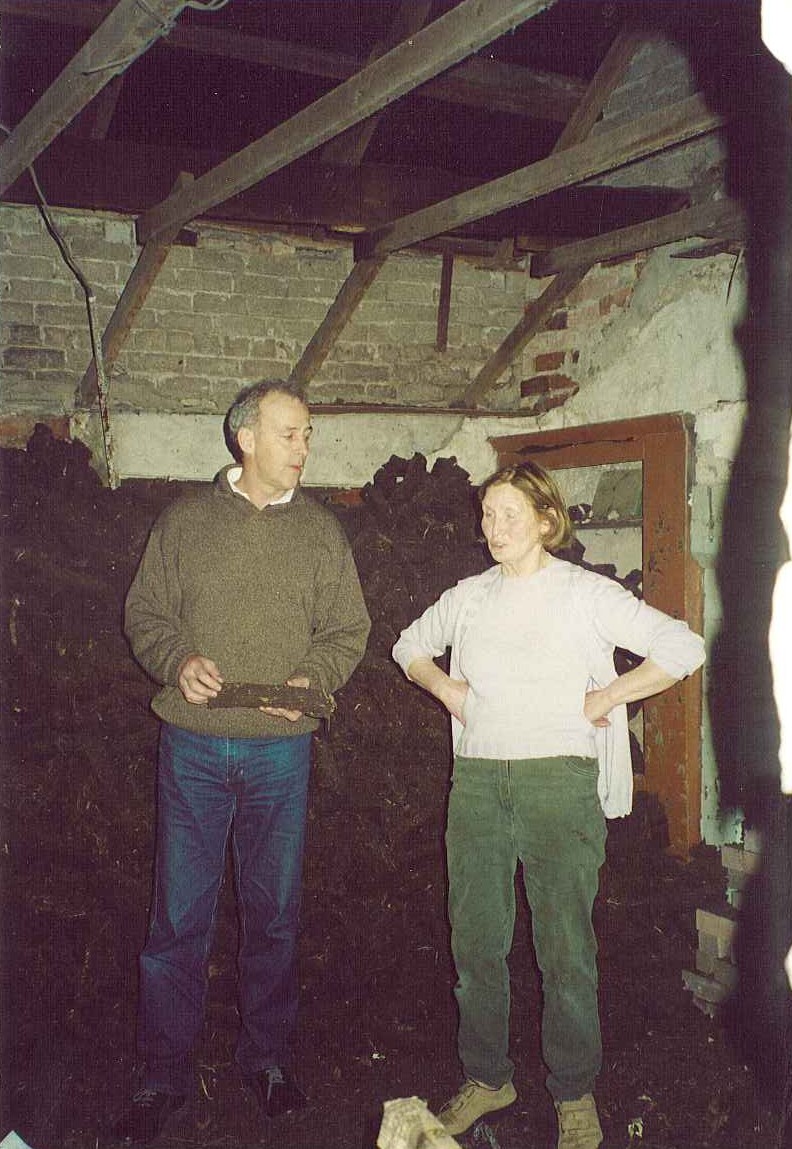
Me with long-lost relation Mary McErlean in my great-grandfather’s old cottage, now used to store turf

Off she went in a little red car down lanes and byways, stopping to walk across a field to a farmer on a tractor harvesting hay. Soon she beckoned me over. Read the rest of this entry »